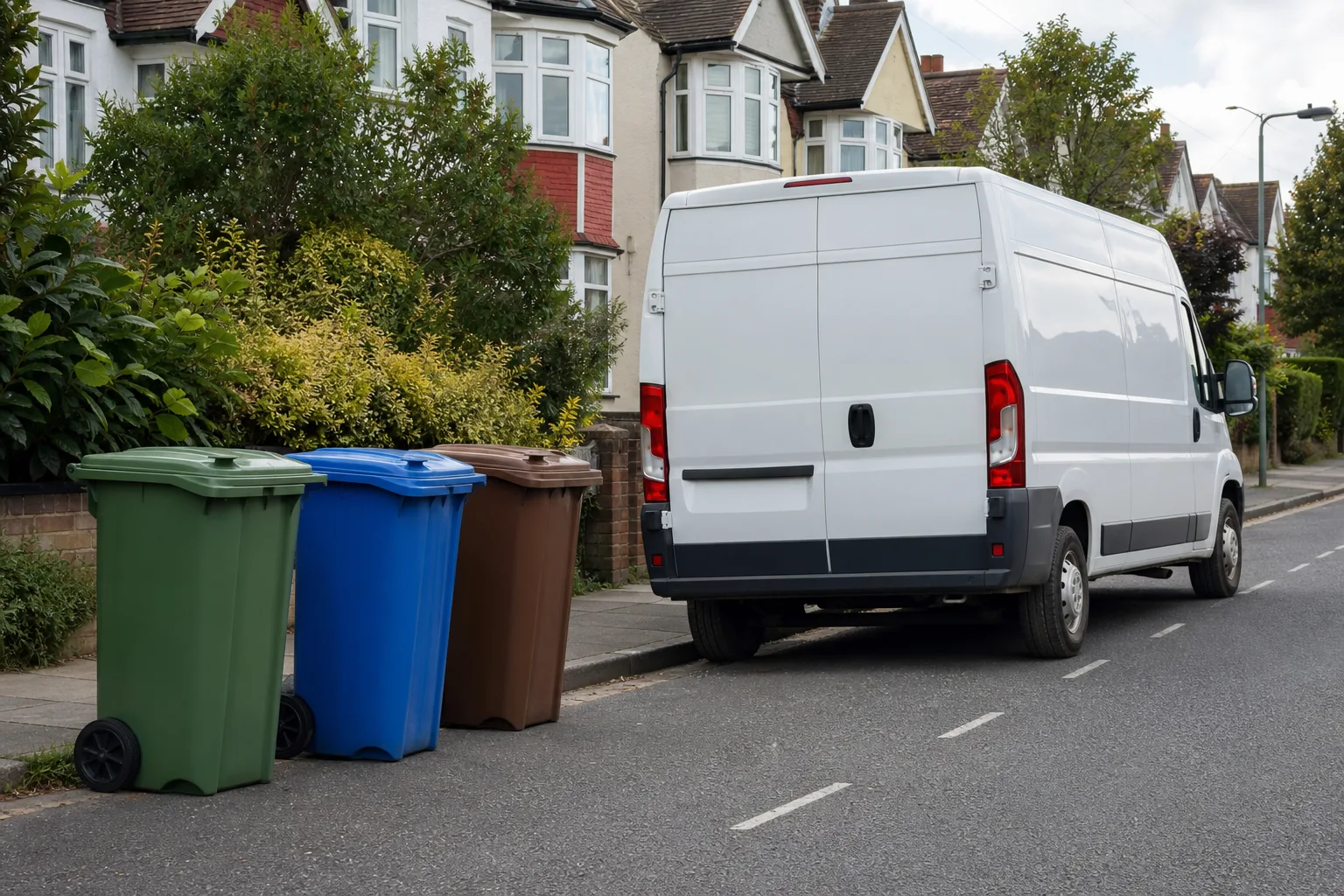
Private rubbish collection means hiring a licensed waste carrier instead of relying solely on council kerbside or bulky services. Across the UK, rubbish collection private operators offer faster mixed-load clearances, indoor collection and flexible booking—while councils remain the default for routine weekly bin emptying funded through council tax.
Council Collection vs Private Clearance
Council services collect standard wheelie bins on fixed schedules, run HWRCs for resident drop-offs, and offer bulky waste slots with limits and waits. They are cost-effective for predictable household waste if you follow sorting rules and calendar dates.
Private rubbish collection fills gaps: same-week house clearances, mixed furniture and bags from upstairs flats, garden builds with assorted junk, and items councils exclude such as certain DIY rubble quantities. You pay per visit or load rather than through council tax.
Both routes must end at permitted disposal sites. Private carriers must hold Environment Agency licences; councils use their own contracted disposal. Fly-tipping from either route is illegal—the producer remains responsible if waste is dumped by a rogue operator.
What Private Rubbish Collection Covers
Typical jobs include end-of-tenancy clearances, garage and loft emptying, probate house clearance, office strip-outs, and post-renovation mixed waste. Crews load vans sized by quarter, half or full transit volume. Metals, cardboard and clean wood may be recycled at transfer stations; residual mixed waste pays gate fees and landfill tax.
Private collection often includes labour to carry items from rooms, dismantle basic furniture, and sweep afterwards—services councils do not offer on standard bulky bookings where items must sit at the kerb.
Commercial premises must use trade waste contracts for ongoing bin emptying; private household-style clearances are for one-off volumes, not weekly shop waste.
How to Book Safely
Verify the carrier licence on the Environment Agency public register. Get a written quote listing VAT, estimated load size, and whether disposal is included. Send photos to reduce surprise surcharges on arrival.
Ask for tipping receipts or transfer notes on larger jobs. Avoid cash-only social media offers far below market rate—they correlate with fly-tipping enforcement cases.
Compare private quotes with council bulky fees and HWRC DIY trips using our guide What's the Cheapest Way to Get Rid of Rubbish? and council context in How Local Councils Manage Waste Services.
Costs and Value
Private rubbish collection typically runs from about £80 for very small loads to £300+ for full van clearances, varying by city, access and waste type. London prices exceed Midlands averages; Manchester and Birmingham sit between rural rates and capital premiums.
Value appears when time matters: completing a property sale, avoiding storage costs, or clearing hazardous trip hazards for vulnerable residents. A subsidised council slot plus two weeks of hallway clutter may cost more in stress than a private visit.
Insurance claims after floods sometimes cover licensed clearance—check policy wording before booking.
How This Works in London
London households often lack cars for tip trips—private rubbish collection private demand stays high. Boroughs like Camden charge per bulky item with waiting lists; agents use private carriers for void properties in Hackney.
Our services provide licensed private clearance—browse areas covered.
How This Works in Birmingham
Birmingham City Council bulky bookings suit single items; landlords in Selly Oak often need private mixed clearances after student tenancies. HWRCs remain free for car loads within limits.
See our Birmingham area guide for council vs private comparison.
How This Works in Manchester
Greater Manchester HWRC van permits complicate DIY clearance—private collection avoids permit paperwork for large indoor loads. Terraced housing in Didsbury favours man-and-van over skip permits.
Local links on our Manchester area page.
Probate, Downsizing and Sensitive Clearances
Executors often need private rubbish collection when emptying estates on tight probate timelines. Respectful crews work room by room with inventory lists—charity shops receive usable goods before disposal. Emotional stress makes council multi-week waits impractical even when cheaper on paper.
Downsizing from family homes to flats combines donation runs with one private van load—planning reduces double handling.
Garden, Shed and Outbuilding Clearances
Private rubbish collection UK services clear sheds, greenhouses and rotten decking councils will not take kerbside. Green waste separated from treated wood may price differently—ask before mixing soil, rubble and old fence panels in one pile.
Access down side passages in terraced homes needs measuring—crews decline unsafe carries without extra staff.
Holiday Lets and Short-Term Rentals
Short-term rental hosts use private rubbish collection when guests leave excess packaging and broken furnishings between turnovers—faster than waiting for council bulky slots that miss the next check-in window. Keep carrier contacts saved in property folders for cleaners to call with photos if you manage remotely.
Documentation for Landlords and Agents
Private rubbish collection UK invoices should show carrier licence details, collection address and date. Deposit dispute panels ask whether void waste was cleared lawfully—tip receipts strengthen landlord positions against tenant claims of pre-existing mess.
Frequently Asked Questions
What is private rubbish collection?
Private collection means hiring a licensed waste carrier instead of waiting for council kerbside or bulky services. You pay per load or item but gain speed and flexibility.
Is private rubbish collection legal?
Yes when the carrier holds a valid Environment Agency waste carrier licence and waste is tipped at permitted sites with documentation.
When should I choose private over council collection?
Choose private for urgent clearances, mixed bulky loads, indoor collection, or items councils refuse such as certain construction waste.