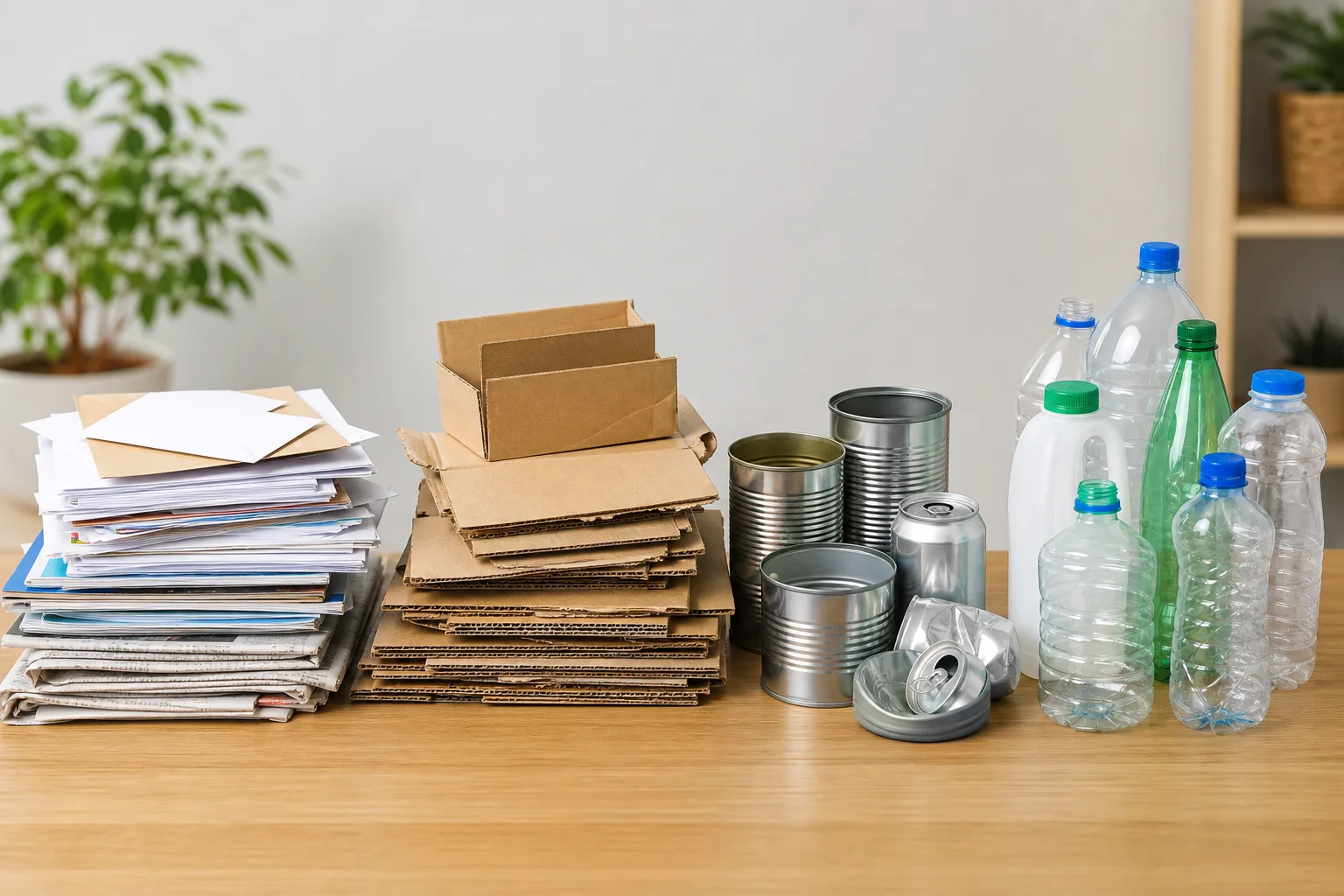
What you can recycle in the UK depends on your council's contract with its sorting plant—not the label on the packet alone. Most households can recycle clean paper, card, metal cans, and many plastic bottles and trays, but film, polystyrene, and greasy cardboard are widely excluded. Checking your local list beats national myths about "recycling numbers" on plastic.
Usually Accepted Kerbside
Paper and card: newspapers, envelopes, cereal boxes, delivery cardboard if flattened and tape removed. No pizza boxes with grease, no glittery gift wrap. Metals: food and drink cans, empty aerosols if punctured per guidance, foil trays rinsed. Plastics: bottles for drinks, milk, and cleaning products; many councils now take pots, tubs, and trays—check pictograms on your bin.
Glass often uses separate boxes or bring banks rather than mixed recycling—colour sorting matters for remelt quality. Some authorities collect cartons (Tetra Pak) in dedicated sacks; others exclude composite layers that need specialist mills.
Common Exclusions and Why
Plastic film, crisp packets, and pouches lack kerbside markets—take to supermarket soft plastic collection points where available. Polystyrene is bulky and low value. Black plastic trays may be invisible to optical sorters. Compostable plastics must not go in recycling unless certified for your council's food waste route—many contaminate PET streams.
Textiles, shoes, and electricals need charity shops, HWRCs, or retailer take-back—not the recycling bin. Batteries and vapes are fire hazards in lorries. Nappies and pet waste belong in general waste.
Recycling Symbols Versus Reality
On-pack recycling labels (OPRL) increasingly say "Recycle" or "Don't Recycle" with clarity, but council lists still win when they differ. Resin codes 1–7 describe polymer type, not recyclability at your MRF. A "widely recycled" bottle may be rejected if lids are wrong type or labels confuse sorters.
Extended producer responsibility will push brands toward mono-material packaging. Until then, rinse containers, squash air out of bottles, and keep lids on or off per local instructions—both practices exist across UK councils.
Mixed-material packaging—crisp tubes with metal bases, coffee pods, laminated pouches—often fails every kerbside stream despite partial recycling symbols. Terracycle-style niche schemes collect some brands; otherwise they are general waste until redesign.
Stainless steel and other metal cookware goes to HWRC scrap skips, not kerbside boxes. Small electrical items with plugs belong in WEEE collection points at shops or tips—never crushed in recycling lorries.
Beyond the Kerbside Box
HWRCs accept wood, metal scrap, hard plastics, plasterboard (separate skip), and WEEE. Supermarkets collect carrier bags and sometimes bread bags. Paint reuse schemes operate at some tips. Commercial waste producers face stricter segregation with gate fees rewarding clean cardboard loads.
Large clear-outs generate cardboard volumes exceeding bin capacity—licensed collectors deliver to transfer stations that feed MRFs without contaminating household streams.
Printer cartridges, light bulbs, and batteries have retailer take-back obligations in many cases—check supermarket foyer collection points. Engine oil from DIY car maintenance goes to HWRC oil banks only. Gas bottles return to suppliers under exchange schemes rather than kerbside.
Reuse beats recycling in the waste hierarchy: charity shops, Repair Café events, and online marketplaces extend product life. Recycling is the fallback when items truly end their useful life—not the first solution for clutter.
How This Works in London
London borough lists vary sharply. Camden publishes estate-specific guides; film in recycling chutes is a top contaminant. Hackney accepts many plastics in wheelie bins but rejects textiles and food in dry recycling.
Flats should use communal signage matching borough rules—not assumptions from previous homes. Overflow from moves? Our rubbish removal services segregate recyclables correctly. See areas covered.
How This Works in Birmingham
Birmingham kerbside recycling covers paper, card, plastics, and cans for most households; glass uses HWRC or bring sites. Garden waste is a charged subscription—do not mix grass into dry recycling.
Trade premises need separate cardboard balers or bins; contamination fines apply on commercial contracts. HWRC guidance lists every material stream accepted locally on our Birmingham area guide, Selly Oak rubbish removal.
How This Works in Manchester
Recycle for Greater Manchester standardises messages: paper and card clean and dry; plastic bottles and food trays per bin stickers; glass at bring banks. Food and drink cartons may use dedicated containers at HWRCs.
Wrong items in bins trigger education visits in problem streets. Checking r4gm.org beats national press articles. Borough nuances on our Manchester area page, Didsbury rubbish removal.
Frequently Asked Questions
Can I recycle pizza boxes?
Only if free from grease and food. Greasy cardboard usually belongs in general waste.
Should bottle lids stay on?
Rules vary by council. Check local guidance — some MRFs prefer lids on plastic bottles to prevent small parts dropping through screens.
Can crisp packets go in recycling?
Usually no in kerbside bins. Some supermarkets offer separate soft-plastic collection points.