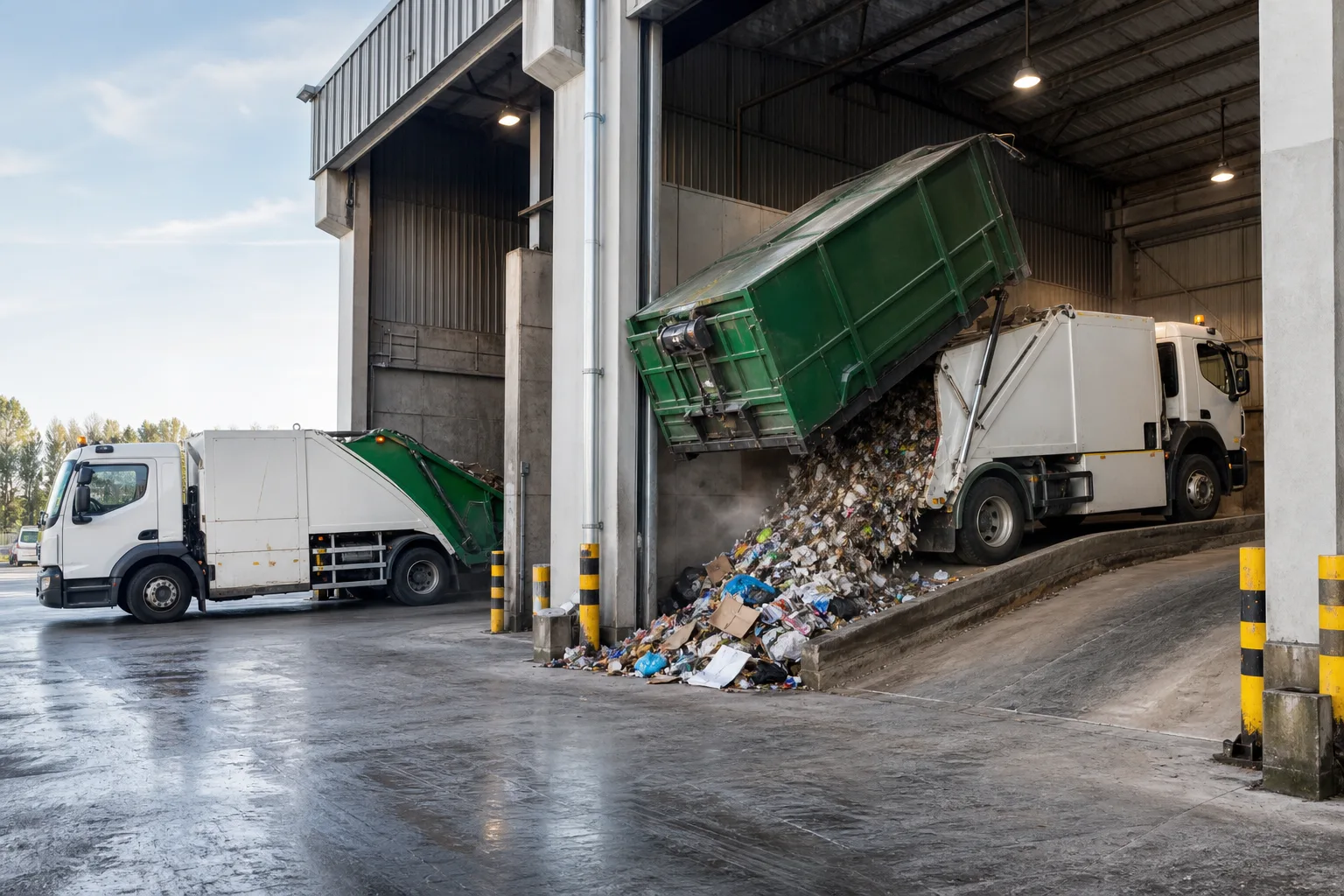
Waste transfer stations are the middle layer of UK rubbish logistics—regional hubs where collection lorries unload, waste is compacted or bulked, and larger vehicles carry it onward to recycling plants, incinerators, or landfills more efficiently than small trucks could manage alone.
Why Transfer Exists
Kerbside collection vehicles are designed for narrow streets and frequent stops, not motorway runs to distant disposal sites. Running them half-empty to a landfill fifty miles away wastes fuel and crew time. Transfer stations let councils and private operators swap many small loads for fewer full articulated trailers.
A typical flow: the dustcart tips into a hall or bunker, a loader pushes waste into a compactor, and the compacted block slides into a walking-floor trailer. Recyclables may bypass compaction to avoid damaging bales. Some sites split streams on the floor—wood one bay, rubble another—before onward haulage.
Permits, Odour, and Neighbour Relations
Transfer stations require environmental permits covering noise, dust, odour, and litter escape. Fast turnaround limits how long waste sits exposed. Netting, wheel washes, and enclosed tipping halls reduce complaints. Planning conditions often cap tonnages and operating hours because sites sit near industrial estates or, controversially, residential edges.
Health and safety rules separate public traffic from waste movements. Fire risk from lithium batteries in general waste has pushed some operators to install detection systems and ban certain wastes at the gate.
Public vs Commercial Gates
Householders rarely enter transfer stations; they use recycling centres run by councils or waste partnerships. Commercial carriers tip trade waste daily, paying gate fees by weight and waste type. Illegal operators who fly-tip avoid these fees but face heavy fines if caught.
Construction and demolition waste often passes through dedicated transfer and sorting yards where aggregates are recovered before residual material moves on. The economics depend on keeping inbound loads reasonably clean—mixed rubble with plastic sacks costs more to handle.
Role in the Circular Economy
Modern hubs increasingly include MRF lines or bulking bays for sorted recyclables heading to reprocessors. Food waste may be consolidated for anaerobic digestion. Transfer is not just landfill logistics; it is where the UK balances local collection with regional processing capacity.
Rail transfer has grown for London and South East residual waste, loading compacted containers onto freight trains to reduce motorway miles and carbon reporting figures. Some sites operate 24-hour gates for commercial customers while restricting household deliveries to daylight hours. Weighbridge data feeds directly into council KPI dashboards and producer responsibility reporting, making transfer stations data nodes as much as physical handover points.
During storms or holiday peaks, transfer buffers absorb extra tonnage when downstream incinerators schedule maintenance. That flexibility prevents kerbside collections from stopping entirely, though temporary odour increases can follow if storage times extend beyond permit limits.
How This Works in London
London’s boroughs rely on a network of transfer and bulking facilities inside and outside the capital. Vehicles from Camden and Hackney typically finish routes at nearby hubs before waste continues by rail or road to energy recovery or MRFs in Essex, Kent, or beyond.
Traffic and weight restrictions mean night collections are common; residents hear lorries returning to depot and transfer points in the small hours. Bulky household waste from clear-outs should not be left at transfer gates—use council booking systems or our licensed collection service. Full coverage is listed on areas covered.
How This Works in Birmingham
Birmingham City Council and its contractors move collected waste through Midlands transfer points before energy recovery or recycling processing. Tyseley energy recovery facility handles much of the city’s residual stream, reducing long landfill hauls.
Trade customers tipping construction waste use commercial transfer yards with weighbridges and waste transfer notes for legal compliance. Household recycling centres feed the same regulated chain. See our Birmingham area guide and Selly Oak rubbish removal for local centre locations and accepted materials.
How This Works in Manchester
Greater Manchester’s waste network includes transfer and bulking at sites such as Longley Lane, linking collections from Manchester and neighbouring boroughs to the combined authority’s processing contracts. Consolidation keeps collection fleets in boroughs rather than on motorways.
Recyclables separated at kerbside are bulked for the regional MRF; general waste moves toward Runcorn energy recovery. Understanding this handover explains why collection times must stay punctual—delays ripple through transfer schedules. Local detail is on our Manchester page, Didsbury rubbish removal.
Frequently Asked Questions
What happens at a waste transfer station?
Smaller collection vehicles unload, waste is compacted and bulked into larger articulated lorries for onward transport.
Why not take bins straight to landfill?
Transfer stations reduce road miles, allow sorting of bulky items and balance loads across regional disposal infrastructure.
Can the public use transfer stations?
Householders typically use HWRCs (tips). Transfer stations are mainly for commercial and municipal collection fleets.