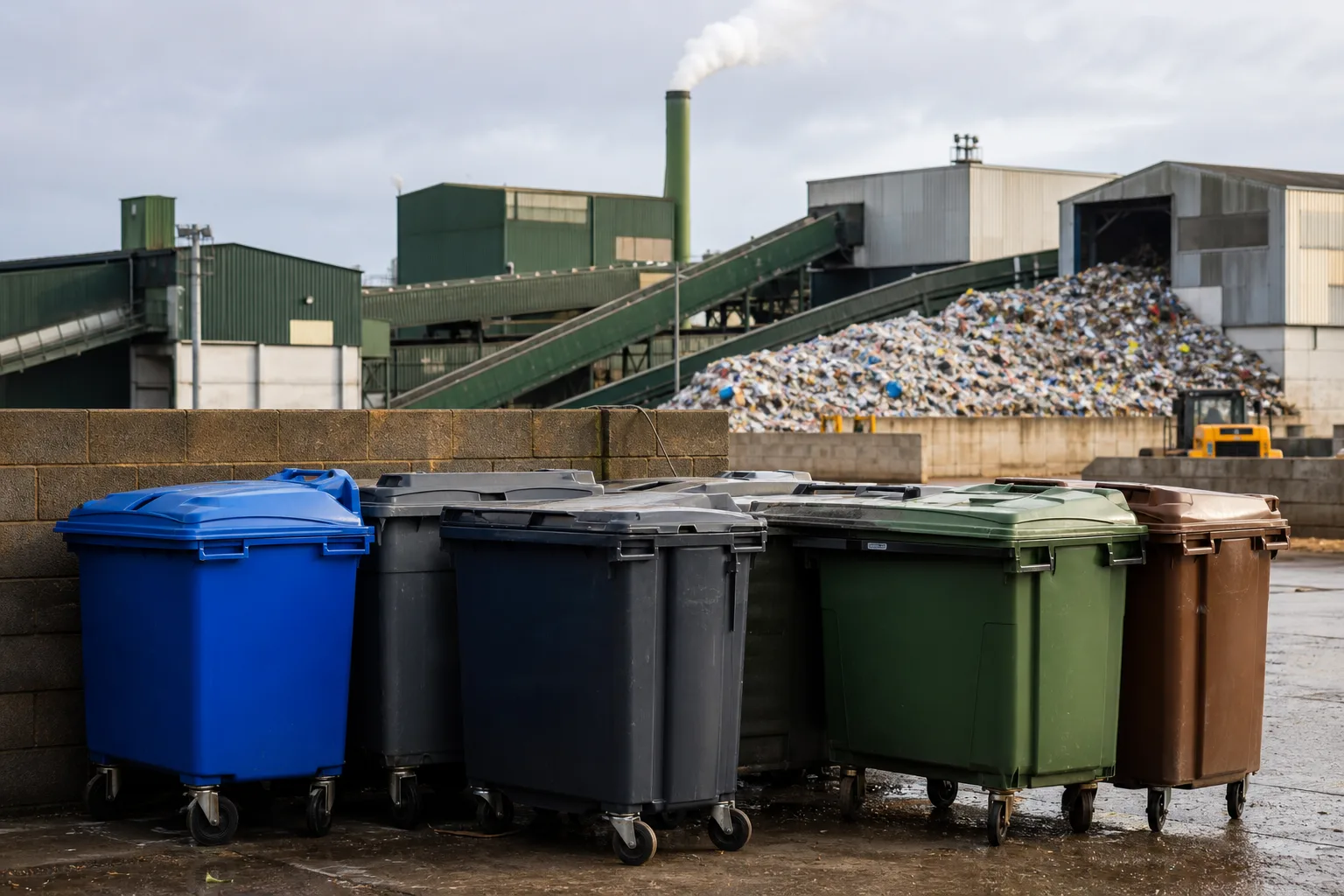
Waste management in the UK costs billions each year across collection, sorting, treatment, and disposal—and householders pay indirectly through council tax, businesses through trade contracts, and everyone through landfill tax that deliberately makes throwing things away expensive.
Where the Money Goes
Typical council waste budgets split among staff and fleet, fuel and maintenance, disposal gate fees, and recycling processing contracts. Landfill tax in England exceeds £100 per tonne for standard rate material, making general waste the costliest stream. Energy-from-waste gate fees sit below landfill but above well-sorted recycling.
Recycling can earn modest income from commodity sales or cost a processing fee depending on market conditions. Food waste collections add new caddy and AD costs but save money by removing heavy organic matter from general bins. Garden waste subscriptions transfer part of the bill to users who opt in.
Who Pays What
Domestic properties rarely see itemised waste charges in England, unlike some European pay-as-you-throw systems. Scotland and Wales experiment with clearer pricing signals. Businesses pay commercial collectors by bin size, weight, or rental—dry recycling lowers bills compared with mixed general trade waste.
Fly-tipping clean-up, litter enforcement, and public realm cleansing add hidden costs beyond bin emptying. Producer responsibility fees on packaging increasingly fund local authority packaging waste management costs, easing pressure on council tax.
Right-to-buy and short-term rental turnover generate waste spikes when furnished flats empty quickly—council bulky limits rarely match the volume, pushing costs onto landlords or into illegal dumping absorbed by public budgets when offenders are not traced.
Drivers of Rising Costs
Inflation in fuel, labour, and insurance hits contracted services. Stricter export rules require cleaner material and domestic investment. Carbon reporting pushes fleets toward electric vehicles with higher upfront capital. Planning delays for new energy recovery capacity leave councils paying premium disposal prices.
Contamination is a financial leak: rejected recycling loads pay twice—processing attempt plus residual disposal. Education and enforcement are cheaper than accepting dirty material.
Industrial action and driver shortages occasionally suspend collections, forcing councils to hire agency crews at premium rates or open temporary drop-off sites—emergency spending that does not appear in ordinary contract prices but shows in year-end overspends reported to auditors.
Value of Prevention
Repair, reuse, and waste prevention save more than any downstream fix. Charity shop collections, refill shops, and council reuse hubs reduce tonnages before they enter paid systems. For unavoidable bulky waste, comparing council bulky fees with private quotes often surprises homeowners either way depending on volume and urgency.
Insurance and probate clearances illustrate hidden waste costs: solicitors and executors budget for licensed house emptying because fly-tipping liability can return to the estate. Landlords factor end-of-tenancy waste into deposit disputes when tenants leave furniture behind. Transparent quotes that include landfill tax and gate fees explain why legitimate collection costs more than informal van men who skip the weighbridge.
Central government packaging EPR payments to councils from the late 2020s should recycle money back into street cleansing and communication, but collection and disposal will remain a major budget line for decades. Even with producer fees, household behaviour at the bin still determines whether that money is well spent or lost to contaminated loads.
How This Works in London
London’s high labour and property costs make collection among the most expensive per tonne in the UK. Boroughs like Camden and Hackney fund estate cleaning, night routes, and congestion-aware scheduling. Exporting residual waste outside the capital adds haulage cost on top of gate fees.
Residents paying for private clear-outs should compare licensed quotes that include disposal fees—cheap cash-in-hand jobs may skip legal tipping. Our services quote transparently; see areas covered.
How This Works in Birmingham
Birmingham City Council manages one of the largest municipal waste budgets outside London. Tyseley energy recovery reduces landfill reliance but still charges gate fees funded by council tax. Optional garden subscriptions offset part of green waste processing.
Trade waste from the city’s hospitality sector pays commercial rates linked to weight. Recycling centre usage is free for householders within limits. Our Birmingham guide and Selly Oak page outline council bulky charges versus private alternatives.
How This Works in Manchester
Greater Manchester’s combined procurement spreads disposal costs across boroughs, aiming for economies of scale at Longley Lane MRF and Runcorn energy recovery. Shared contracts reduce per-tonne processing compared with tiny authorities negotiating alone.
Food waste rollout costs upfront but removes heavy organic fraction from general waste, lowering incineration weight charges long term. Manchester City Council publishes environmental reports with tonnage and cost indicators. Details on our Manchester area page, Didsbury rubbish removal.
Frequently Asked Questions
Why is waste disposal expensive in the UK?
Landfill tax, energy costs, labour and strict environmental permitting all push gate fees upward.
Is private rubbish removal more expensive than the council?
Private clearance is faster and handles items councils will not take, but per-load costs reflect labour and disposal fees.
Do businesses pay different waste rates?
Yes. Commercial waste is not collected free by councils. Businesses need licensed trade waste contracts.