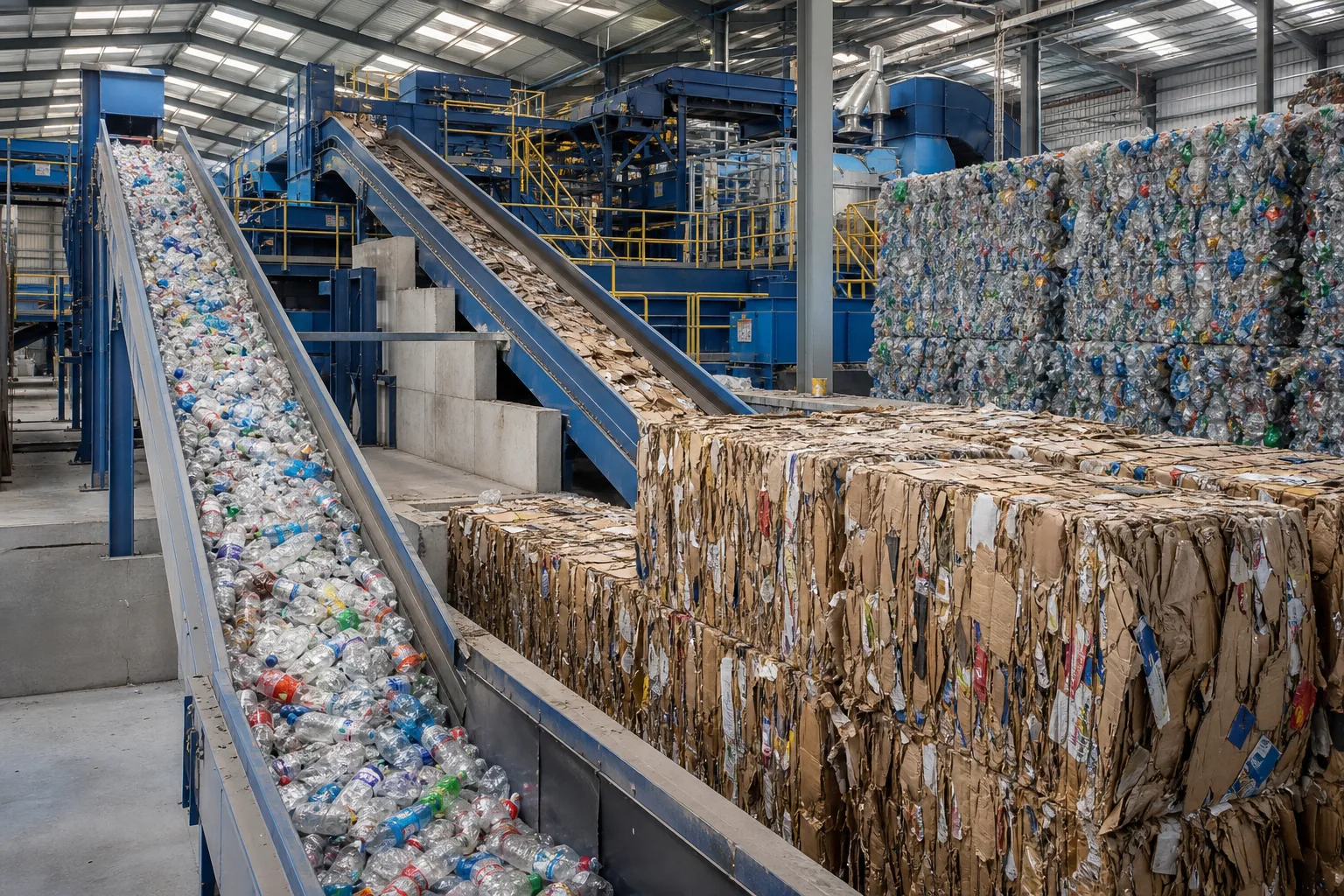
Recycling in the UK is not free charity work for the environment—it is a commodity market where sorted paper, metals, and plastics are bought and sold like any other raw material. When global prices fall or contamination rises, councils and waste operators feel it immediately in their budgets, which is why what you put in your bin directly affects local service costs.
Where Recyclable Value Comes From
When you rinse a yoghurt pot and drop it in the recycling, it enters a supply chain that stretches from your kerbside box to reprocessors in the UK and abroad. Material recovery facilities (MRFs) sort mixed streams into bales of cardboard, aluminium, PET plastic, and steel. Reprocessors melt, pulp, or pelletise these inputs and sell them to manufacturers who prefer recycled feedstock when prices compete with virgin materials.
Strong markets exist for clear PET bottles, aluminium cans, and clean cardboard. Weaker markets struggle with mixed plastics, film wrap, and heavily contaminated paper. The Environment Agency tracks waste shipments and requires exporters to prove material meets quality standards. A downturn in Chinese import rules in 2018—often called the National Sword policy—forced the UK to invest more in domestic sorting capacity and to accept lower income from some streams.
Who Pays and Who Profits
Householders rarely pay per kilogram for recycling, but the cost is embedded in council tax and commercial waste contracts. Local authorities contract private operators to collect and process recyclables. When bale prices are high, operators may share revenue with councils or offset gate fees. When prices collapse, councils subsidise processing from general waste budgets.
Extended producer responsibility (EPR) schemes are shifting more packaging costs onto brands and retailers. From 2024 onwards, modulated fees reward easily recyclable packaging and penalise hard-to-recycle formats. Deposit return schemes for drinks containers in Scotland—and planned expansion elsewhere—add another revenue layer by capturing high-value bottles before they reach household bins.
Quality Beats Quantity
Economics favour clean, well-separated material. One greasy pizza box can downgrade an entire paper bale from premium newsprint grade to reject status destined for energy recovery or landfill. That is why councils publish detailed guidance: the financial penalty for contamination often exceeds the collection cost of the bin itself.
Investment in optical sorters, eddy-current separators, and AI vision systems at modern MRFs improves yield, but no machine replaces sensible sorting at source. Businesses with trade waste contracts face gate fees per tonne; cleaner loads mean lower bills and fewer rejected deliveries at transfer stations.
Future Pressures on the Market
Net-zero targets, landfill tax escalators, and incineration capacity limits all push waste up the hierarchy toward reuse and recycling. Circular economy policy expects more domestic reprocessing so the UK is less exposed to export market shocks. For households, the practical takeaway is simple: recycling saves money for your council only when it is done correctly.
How This Works in London
London boroughs operate as separate waste authorities, each negotiating collection and MRF contracts independently. Dense inner areas face higher logistics costs per tonne collected, which makes contamination especially expensive. In Hackney, communal bin stores in estates mean one contaminated sack can spoil a whole recycling load. Camden mixes kerbside boxes with estate-based services, and both boroughs publish strict “no black bags in recycling” rules to protect bale value.
Commercial waste in central London adds another layer: restaurants and offices pay for separate dry-mixed recycling collections where clean cardboard commands better rebates. If you need bulky items or extra sacks cleared outside collection days, our rubbish removal services across the capital can supplement borough rounds. See all locations on our areas covered page.
How This Works in Birmingham
Birmingham City Council serves one of the largest municipal waste volumes outside London. The council operates recycling collections for paper, card, plastics, and cans, with garden waste charged separately. Recyclables from Birmingham households are processed through regional facilities; market income helps offset collection costs but does not cover the full service.
Contamination campaigns and clearer bin labelling aim to improve bale quality after periods of high reject rates. Trade waste producers in the city pay gate fees linked to weight and material type. For city-wide context and local collection rules, visit our Birmingham area guide, Selly Oak rubbish removal.
How This Works in Manchester
Manchester City Council sits within the Greater Manchester Combined Authority waste arrangement, where recyclables are processed through publicly owned infrastructure including the materials recovery facility at Longley Lane. The system prioritises consistent quality across nine boroughs rather than each council selling bales independently.
Greater Manchester’s “Bin it right” messaging ties directly to economics: rejected loads cost the combined authority money that could fund other services. Paper and card must be clean and dry; plastic bottles need lids removed only where guidance specifies. Learn more about local expectations on our Manchester area page, Didsbury rubbish removal.
Frequently Asked Questions
Why do recycling costs vary between UK cities?
Gate fees at MRFs, transport distances, contamination rates and council contract terms all differ. Dense cities like London pay more for haulage but benefit from higher commodity volumes.
Do councils make money from recycling?
Sometimes on high-value materials like aluminium and cardboard, but contamination and low-grade plastics often cost more to process than they earn.
How does landfill tax affect recycling economics?
Rising landfill tax makes recycling comparatively cheaper, incentivising councils and businesses to divert material from disposal.