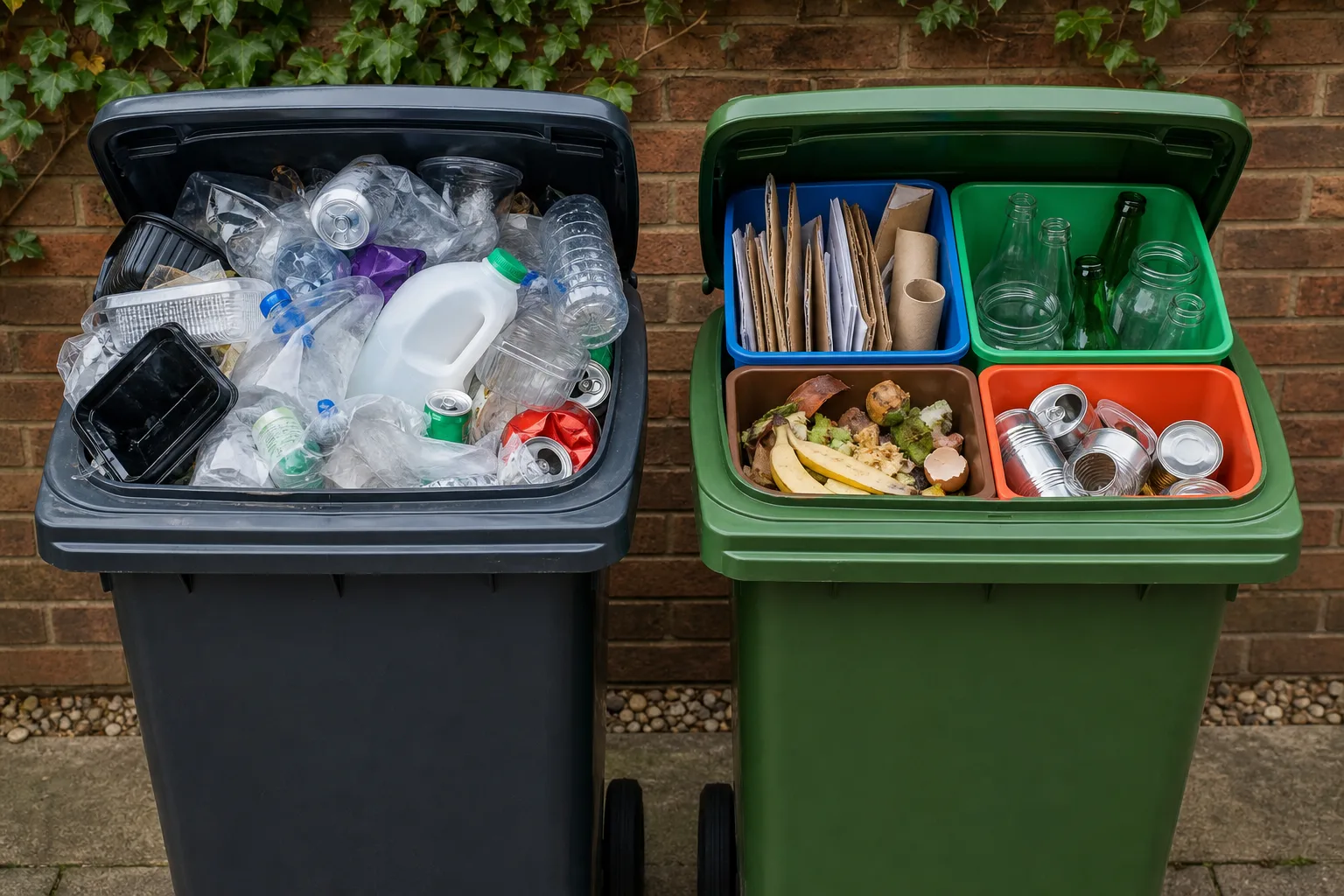
Mixed waste and separated waste follow different UK processing paths: separated streams reach recyclers cleaner and cheaper, while mixed general waste is compacted for energy recovery or landfill with only limited metals recovered afterward from ash.
Definitions That Matter
Separated waste means keeping recyclables, food, garden material, and general waste in distinct containers from the point of collection. Mixed waste usually describes general black-bin contents or trade sacks where everything shares one container until a facility sorts or treats it as a whole.
Dry mixed recycling is a middle category—recyclables together but separate from general waste. It is “mixed” among paper and plastics but still not the same as throwing cans into a general bin.
“Co-mingled” and “single-stream” labels in council leaflets describe dry mixed recycling variants—helpful for residents comparing boroughs, but confusing when people assume co-mingled means food and plastic together, which would contaminate both streams severely. Reading the leaflet footnotes saves a contaminated bin tag later.
Processing Separated Streams
Clean paper and card go straight to pulping or sheet mills with minimal pre-processing. Food waste in dedicated caddies reaches AD plants without diluting energy content with plastic. Garden waste composts or digests separately. Each path maximises recovery value and minimises gate fees.
Source-separated glass in bottle banks produces colour-sorted cullet remelted into new bottles efficiently. Separated electricals go to WEEE processors recovering copper and precious metals under regulated conditions.
Separate food waste also produces digestate regulated under the British Standard for composted materials when destined for farmland—impossible if food is mixed into general waste. That regulatory chain is why councils invest in caddies and liners even when upfront costs annoy residents who preferred one bin for everything.
What Happens to Mixed General Waste
Mixed household waste is rarely sorted by hand at scale. It is compacted, burned in energy-from-waste plants where permitted, or landfilled. Post-incineration magnets recover some metals from bottom ash. Organic content burned releases fossil-based CO2 from plastics and methane savings only if food was kept out earlier.
Mechanical biological treatment plants occasionally pull recyclables from mixed waste mechanically, but yields are lower and quality poorer than kerbside separation. Costs reflect the extra handling.
Bottom ash from incineration can substitute aggregate in road building where regulators approve, closing part of the loop—but never replacing source separation for high-grade paper and metals. Mixed waste routes therefore remain the lowest tier of the hierarchy despite energy recovery sounding greener than landfill alone.
Commercial and Clear-Out Context
House clearances and office strip-outs often start as mixed loads on site. Licensed carriers may sort at the vehicle, at transfer stations, or send to specialist MRFs charging by purity. Cleaner pre-sort on site reduces client fees and improves recycling rates documented on waste transfer notes.
Skip hire illustrates the trade-off: a single mixed builder’s skip is convenient but sends rubble, packaging, and timber together to a sorting yard with higher fees than separate wood and metal skips. Householders mimicking builder practice by dumping everything in one load pay for sorting twice—once in labour at home, again at the gate.
Waste hierarchy guidance for businesses legally requires considering reuse and separation before disposal. Audit trails for ISO 14001 environmental management often demand evidence that separated streams were genuinely sent to recovery—not blended silently en route to save truck space.
How This Works in London
London flats sometimes default to mixed general chutes unless estates enforce recycling rooms. Camden pushes separated kerbside boxes where access allows. Hackney pairs food caddies with recycling to pull organics out of mixed black bins, shrinking residual tonnage.
Renovation waste mixed with rubble and wood needs separate skips or collections—our team can split loads on pickup. Coverage on areas covered.
How This Works in Birmingham
Birmingham City Council expects separated recycling boxes and general waste bins. Mixing recycling into general waste loses recoverable material and increases Tyseley incineration weight. Garden waste stays in subscribed green bins only.
Trade customers choosing dry mixed recycling versus general sacks see different gate fees at transfer. Our Birmingham guide and Selly Oak page explain household separation rules.
How This Works in Manchester
Greater Manchester’s twin-stream kerbside model separates paper and card from containers before MRF processing—deliberately not mixing them in one bag. Food caddies add a third separated stream. General green or grey bins carry true mixed residual waste to energy recovery.
Confusing bin colours causes accidental mixing; GMCA campaigns stress separation at home beats sorting later. Manchester details on our Manchester area page, Didsbury rubbish removal.
Frequently Asked Questions
Is separated recycling better than co-mingled?
Separation at source produces cleaner streams but needs more bins and resident effort. Co-mingled is simpler for households.
Why do London flats use communal mixed bins?
Space constraints and high turnover make multiple bins per flat impractical in many developments.
Does mixed waste always go to landfill?
No. Mixed recycling goes to MRFs. Only residual black-bin waste typically goes to energy recovery or landfill.