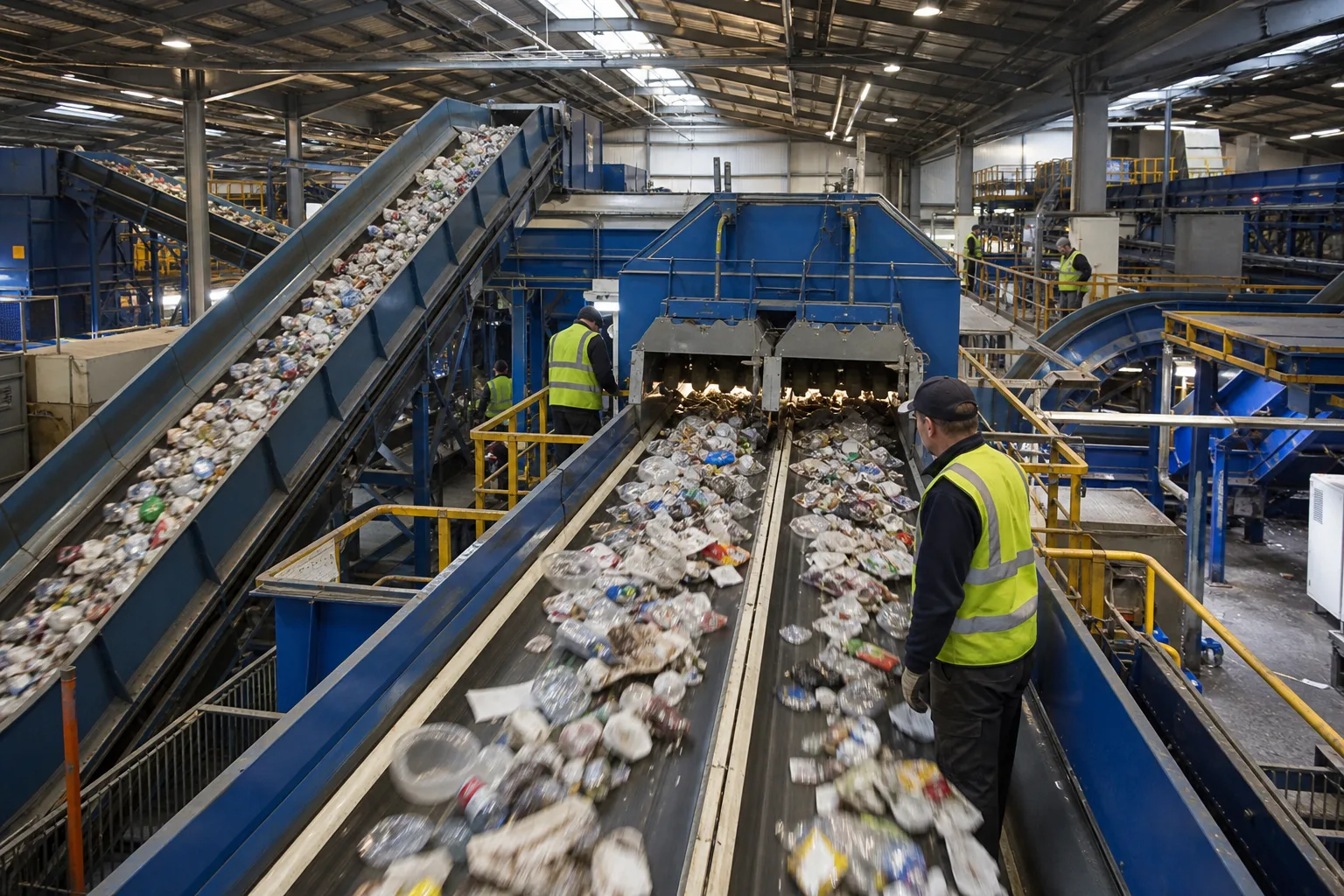
A materials recovery facility—MRF, pronounced “murf”—is an industrial sorting plant where mixed recycling from homes and businesses is separated by size, magnetism, and machine vision into bales of paper, metal, and plastic sent to reprocessors.
Inbound to Outbound Flow
Lorry loads tip onto a tipping floor or feed conveyor. Pre-sort staff remove obvious bags, textiles, and hazards before material enters drum screens that split cardboard from containers. Magnets pull ferrous steel; eddy currents eject aluminium. Optical sorters use infrared to identify plastic polymer types and puff air jets to eject them into chutes.
Balers compress each stream into cubes weighing half a tonne or more, strapped for export or domestic mills. Quality controllers inspect bales; rejected material returns to residual lines. Throughput on modern lines exceeds thirty tonnes per hour on the largest UK plants.
Weather matters: wet January cardboard clogs screens; summer heat accelerates odour from residual fines stored before removal. MRF managers schedule deep cleans and belt replacements during quiet weeks because downtime during peak recycling season is more expensive than overtime labour. Public open days at flagship plants help residents connect bin rules with the machinery that enforces them.
Manual and Mechanical Limits
Despite automation, pickers still stand along belts removing film, wood, and nappies machines miss. Health and safety rules mandate PPE, rotation, and dust control. Jammed plastic bags shut lines within minutes—why councils insist on loose recycling.
Older MRFs lack advanced optics and produce lower-grade bales. Investment cycles follow contract renewals; councils choosing cheapest tenders may inherit outdated kit with higher rejection rates.
Night shifts at large MRFs keep pace with daytime London collections tipping until late evening. Noise and lighting conditions for staff contrast sharply with the quiet kerbside experience residents see at dawn—another hidden labour cost embedded in processing fees councils pay per tonne.
Quality Specifications
Buyers publish maximum contamination percentages—often below five percent for paper. Loads above thresholds face chargebacks or rejection. Export markets require inspection certificates; domestic mills demand consistent moisture and fibre length.
Glass in paper streams breaks into sharp fines damaging pulping equipment. Food residue moulds during storage. MRF economics depend on inbound quality more than outbound speed.
Paper mills closing in the UK have made MRF operators more dependent on export buyers who specify different grade names—UK councils must translate local bin rules into those grade names through contract managers residents never meet. When export ports congest, bales stockpile at MRFs, incurring storage costs until ships sail.
Types of MRF
Kerbside MRFs handle household mixed recycling. Commercial MRFs process office paper and dry mixed recycling at higher quality. Some sites integrate construction waste sorting for aggregates and wood. In-vessel composting and AD plants are separate technologies though co-located on waste parks.
Dual-stream plants accepting paper separate from containers produce cleaner bales than single-stream systems where glass shards embed in cardboard. The UK mix reflects decades of contract choices; retrofits to add optics cost millions and pause lines during installation. Smaller rural MRFs may rely more on manual picking with lower capital spend but higher labour cost per tonne.
Output tracking increasingly uses barcoded bales so reprocessors can trace contamination complaints back to collection rounds or commercial clients—a feedback loop that may eventually fine repeat offenders at source. Councils reviewing quarterly MRF reports sometimes renegotiate contracts when rejection rates climb, which can change your accepted materials list mid-year without fanfare.
How This Works in London
London boroughs contract MRF capacity in and outside the capital. Waste from Hackney and Croydon may share regional plants after transfer bulking. Flat contamination rates influence which facilities accept estate loads.
Commercial offices in central London often use dedicated trade MRF routes with higher paper quality. Household clear-outs should not mimic MRF input—mixed furniture and rubble belong elsewhere. Use our collection service for sorted uplifts; see areas covered.
How This Works in Birmingham
Birmingham’s recyclables feed Midlands MRFs under city council contracts. The council communicates accepted items matching plant capability—changes when processors upgrade optics. Rejected bales cost the city disposal fees residents ultimately fund.
Recycling centres send some streams directly to special processors, bypassing kerbside MRFs. Trade dry mixed recycling uses the same plants with stricter chargeback rules. Our Birmingham guide and Selly Oak page list kerbside-compatible materials.
How This Works in Manchester
Greater Manchester’s Longley Lane MRF is a flagship public facility sorting paper, card, and containers from multiple boroughs including Manchester. Combined authority investment targeted export reduction and higher bale quality after national market shocks.
Visitor centre tours occasionally explain the process—check GMCA listings. Bin it right campaigns align directly with MRF capability. Local summary on our Manchester area page, Didsbury rubbish removal.
Frequently Asked Questions
What is an MRF?
A materials recovery facility sorts mixed recycling into paper, metals, plastics and other streams for sale to reprocessors.
How fast can an MRF sort recycling?
Large facilities process tonnes per hour using automated belts, magnets, eddy currents and optical sorters.
Why do MRFs reject entire loads?
High contamination or dangerous items like batteries can make a full lorry load uneconomic to sort safely.