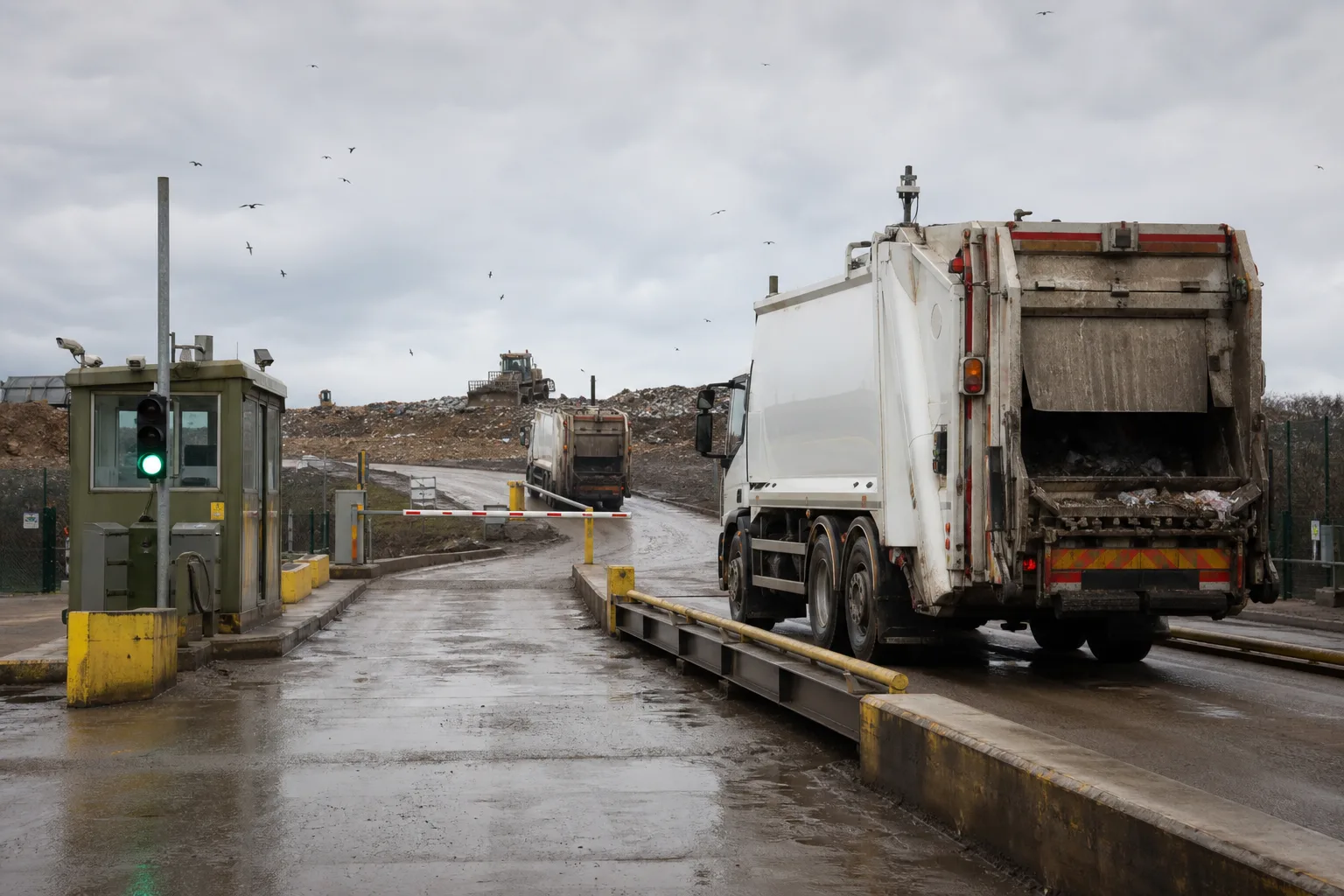
UK landfill tax is the government's primary lever to make burying waste more expensive than recycling or recovery—it rises each April on a pre-announced escalator. For 2026, the standard rate continues climbing well above £100 per tonne for active waste, with a lower band for inert materials. That tax sits on top of gate fees, transport, and compliance costs, which is why every black bag and skip load you send to landfill indirectly funds Treasury receipts while councils hunt alternatives.
How Landfill Tax Works
Landfill tax applies at the point waste is deposited at permitted landfill sites in England and Northern Ireland (Scotland and Wales operate devolved equivalents). Operators account for weight on weighbridges and pass costs to waste producers—councils, businesses, and ultimately households through council tax or service charges.
Two rates apply: standard rate for most household and commercial mixed waste, and lower rate for qualifying inert materials such as clean rubble meeting strict criteria. Misclassification risks penalties; Environment Agency audits check sampling. Fines for illegal disposal avoid tax briefly but carry criminal sanctions far exceeding any saving.
2026 Rate Context and Escalator
HM Treasury publishes future rates years ahead to let councils and investors plan. The escalator typically increases standard rate by £10 per tonne annually, though budgets may adjust timing. By 2026, cumulative rises since the 1990s have transformed landfill from default cheap option to last resort economically.
Lower rate increases more slowly, still encouraging proper separation of construction inert waste from mixed active loads. Gate fees at commercial landfills add £20–£80+ per tonne depending on region, on top of tax—true landfill cost often exceeds £150 per tonne for mixed waste in southern England.
Scotland's landfill ban on biodegradable municipal waste for councils pushes material toward recycling and AD even where tax alone might not—policy layering matters. Wales targets zero waste by 2050 with similar instruments. England relies more heavily on tax escalator plus EPR to shift behaviour.
Carbon trading and landfill methane reporting increasingly appear in operator compliance—tax is financial; climate reporting is reputational pressure on top for large waste companies.
Who Feels the Impact
Local authorities face landfill tax on residual black bag waste after recycling and food collections. Higher tax accelerates investment in energy-from-waste and anaerobic digestion, but capacity is finite—some regions still export refuse-derived fuel.
Businesses see tax through skip hire and trade waste invoices itemised as disposal plus tax. Construction firms separating inert hardcore from mixed skips save substantially. Households feel it indirectly: garden waste charges, bulky collection fees, and reduced opening hours at HWRCs when budgets tighten.
Alternatives the Tax Is Designed to Push
Recycling and composting avoid standard rate when material is genuinely diverted. Repair, reuse, and waste prevention avoid tonnage entirely—the best tax saving. Energy-from-waste still incurs gate fees and environmental debate but avoids landfill methane and tax at full standard rate for many streams.
Illegal dumping is a false economy: councils spend clearance funds without generating tax revenue, and offenders face prosecution. Licensed recycling routes cost less than landfill tax plus cleanup fines when fly-tipping is traced to source.
Producer responsibility reforms pass more packaging disposal cost to brands through modulated fees—complementing landfill tax by attacking waste at design stage. Together they make cheap disposable packaging harder to sustain commercially.
Accounting transparency: landfill tax receipts go to Treasury, not councils directly—so local authorities feel the cost through gate fees while central government collects revenue, a political tension in waste policy debates.
How This Works in London
London landfilled little residual waste compared with regions with spare landfill capacity—most goes to EfW along the Thames. Tax still applies to rejected recycling and low-grade residues. Croydon and outer boroughs pay transport to distant facilities when local capacity is tight.
High property values make landfill siting near London politically impossible—tax plus logistics push aggressive recycling targets. Bulky clearances through our rubbish removal services use transfer stations that minimise landfill-bound fractions. See areas covered.
How This Works in Birmingham
Birmingham's residual waste strategy relies on EfW and regional landfill when necessary; tax appears in contract prices with private operators. HWRC rubble skips separate inert loads for lower tax bands where quality allows.
Businesses renovating city properties should segregate plasterboard and mixed rubble—wrong skips trigger standard rate on entire load. Council bulky waste fees partly reflect disposal tax pass-through. More on our Birmingham area guide, Selly Oak rubbish removal.
How This Works in Manchester
Greater Manchester's publicly influenced disposal contracts bundle tax into gate fees across the conurbation. Recycling quality campaigns save money because reject bales pay tax-weighted disposal if not burned.
Trade waste producers see itemised environmental charges on invoices—landfill tax is a significant line. Inert construction waste routes through dedicated facilities in the region. Local context on our Manchester area page, Didsbury rubbish removal.
Frequently Asked Questions
When does landfill tax increase in 2026?
Rates typically rise on 1 April each year in line with Treasury announcements.
Does landfill tax affect council tax?
Indirectly. Higher disposal costs feed into waste contracts that councils fund through overall budgets.
How can I avoid paying higher landfill costs personally?
Recycle correctly, compost food waste where offered, and donate usable items before resorting to disposal.