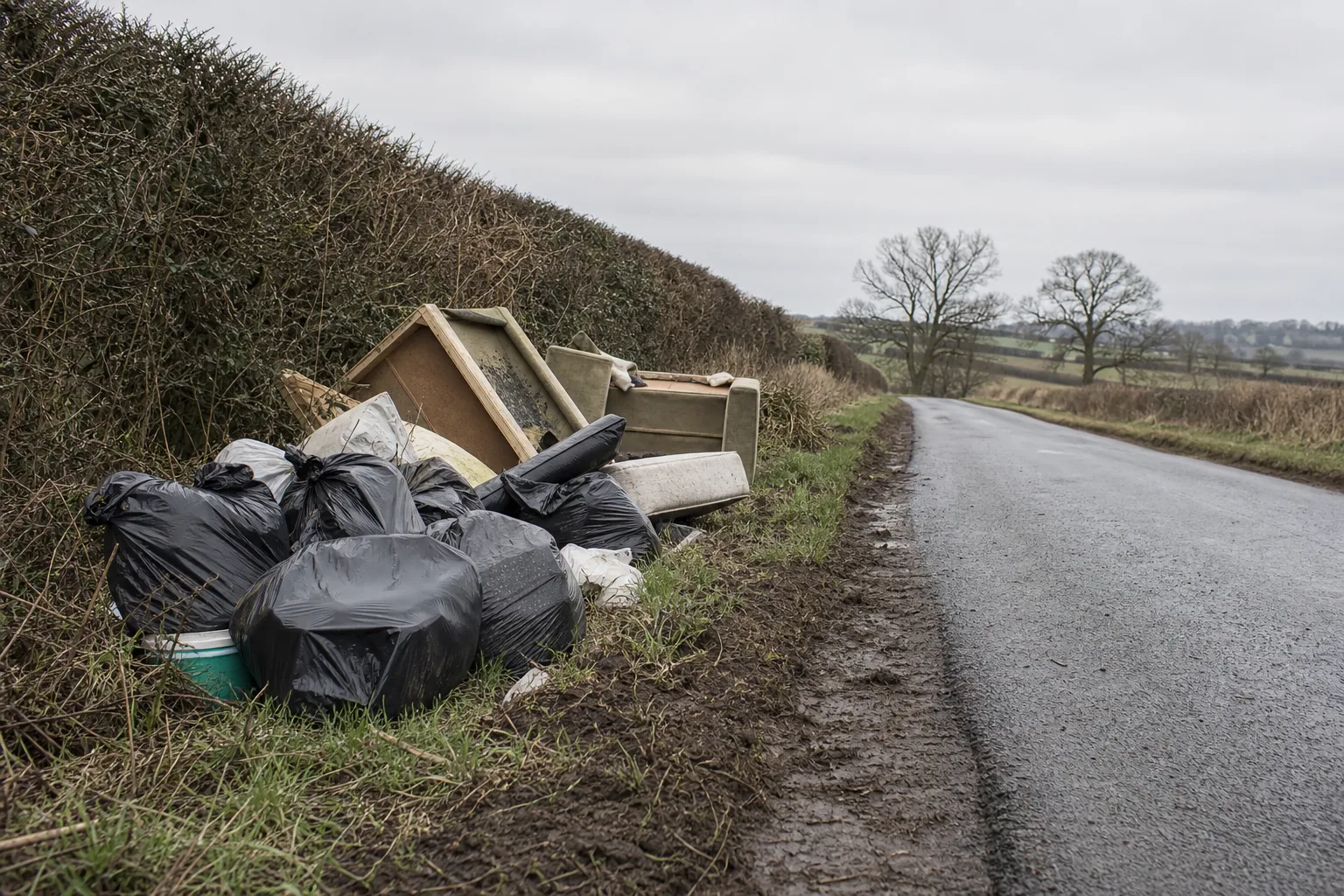
Illegal dumping—fly-tipping—costs UK councils more than £100 million a year in clean-up and enforcement, but the deeper damage is environmental: soil contamination, water pollution, fire risk from dumped tyres, and wildlife harmed by plastics and chemicals left in hedgerows and lay-bys. Every tonne tipped illegally shifts the burden from the person who created the waste to the public who pays to remove it.
What Counts as Illegal Dumping in the UK
Fly-tipping is the unlawful deposit of waste on land without a permit or the owner's consent. It ranges from a single black sack beside a rural gate to lorry-loads of construction rubble on farmland. The Environmental Protection Act 1990 and regulations under the Clean Neighbourhoods and Environment Act give local authorities and the Environment Agency powers to investigate, prosecute, and issue fixed penalty notices.
Householders have a legal duty of care: if you pay someone to take your waste and they dump it, you can be fined alongside the tipper. Always use licensed waste carriers and ask for a waste transfer note. Unlicensed "man with a van" adverts on social media are a common source of fly-tipped household clear-outs.
Environmental Harm Beyond the Eyesore
Dumped waste does not sit inert. Liquids leach into soil and groundwater; asbestos sheets and plasterboard release hazardous fibres and sulphates when broken; batteries corrode and spill heavy metals. Tyres collect rainwater and become mosquito breeding sites. Mixed loads of food and packaging attract rats and spread disease into nearby fields and streams.
Natural England and local biodiversity officers report nesting birds disturbed by repeated tipping on commons and nature reserves. Plastic film and netting entangle wildlife. Even apparently harmless green waste—grass cuttings and branches—can alter soil chemistry and smother native plants when piled in volume.
Who Pays and How Enforcement Works
Councils must remove fly-tipped waste from public land promptly, often before tracing the offender. CCTV, drone surveys, and tip-site forensics (addresses in discarded mail, vehicle tracks) support prosecutions, but clearance still drains budgets that could fund recycling or street cleaning. Farmers and private landowners bear removal costs on their own land unless insurers or grants help.
Magistrates' courts can impose unlimited fines for serious cases; many incidents are dealt with via £400 fixed penalties. The Environment Agency targets organised commercial tipping linked to waste crime gangs who undercut licensed disposal fees. Landfill tax and gate fees at legal sites are part of why criminals dodge them—but the public pays more when clean-up and enforcement are added back in.
Prevention and Responsible Disposal
Reducing fly-tipping means making legal routes easier and cheaper than crime. Household waste recycling centres accept many materials free for residents; bulky waste collections are available from most councils for a moderate charge. Businesses must use registered carriers and keep records for three years.
Reporting incidents quickly via council websites or the national fly-tipping database helps authorities map hotspots. Do not touch suspected hazardous waste; photograph, note location, and report. Community litter picks and vigilance around bring banks reduce the broken-window effect where one tip encourages another.
How This Works in London
London's density and alleyways create hiding spots for fly-tipping, especially mixed household and builder waste. Hackney enforces heavily around estates and canal paths where CCTV has been expanded. Camden sees commercial waste dumped near markets and residential streets alike; both boroughs urge residents to verify carrier licences before booking clearances.
If you have waste that will not fit standard collections, use our licensed rubbish removal services rather than risking illegal disposal. We issue transfer notes and route material to permitted sites. See coverage across the capital on our areas covered page.
How This Works in Birmingham
Birmingham City Council clears thousands of fly-tipping reports annually, from inner-city back lanes to outer estates. The council promotes bulky waste bookings and HWRC use to undercut illegal operators. Trade waste producers in the city face strict duty-of-care checks during Environment Agency visits.
Construction and renovation waste must go to licensed transfer stations with weighbridge tickets. For local rules and responsible disposal options, see our Birmingham area guide, Selly Oak rubbish removal.
How This Works in Manchester
Greater Manchester authorities share intelligence on fly-tipping hotspots along canals, industrial fringes, and retail parks. The combined authority's focus on waste crime ties into regional disposal contracts—legal gate fees fund proper treatment, while dumped loads bypass environmental safeguards entirely.
Residents clearing homes or gardens should use council bulky collections or licensed private collectors. Report tipping via the council app with photos and location pins. More detail on local services is on our Manchester area page, Didsbury rubbish removal.
Frequently Asked Questions
What counts as illegal dumping in the UK?
Depositing waste without a licence or permission on public or private land — including leaving items beside bins or in alleyways.
What are the penalties for fly-tipping?
Unlimited fines in magistrates court, possible prison for serious repeat offences, and councils can seize vehicles used in dumping.
How do I report fly-tipping?
Report to your local council with location photos. Do not touch waste that may contain hazardous material.