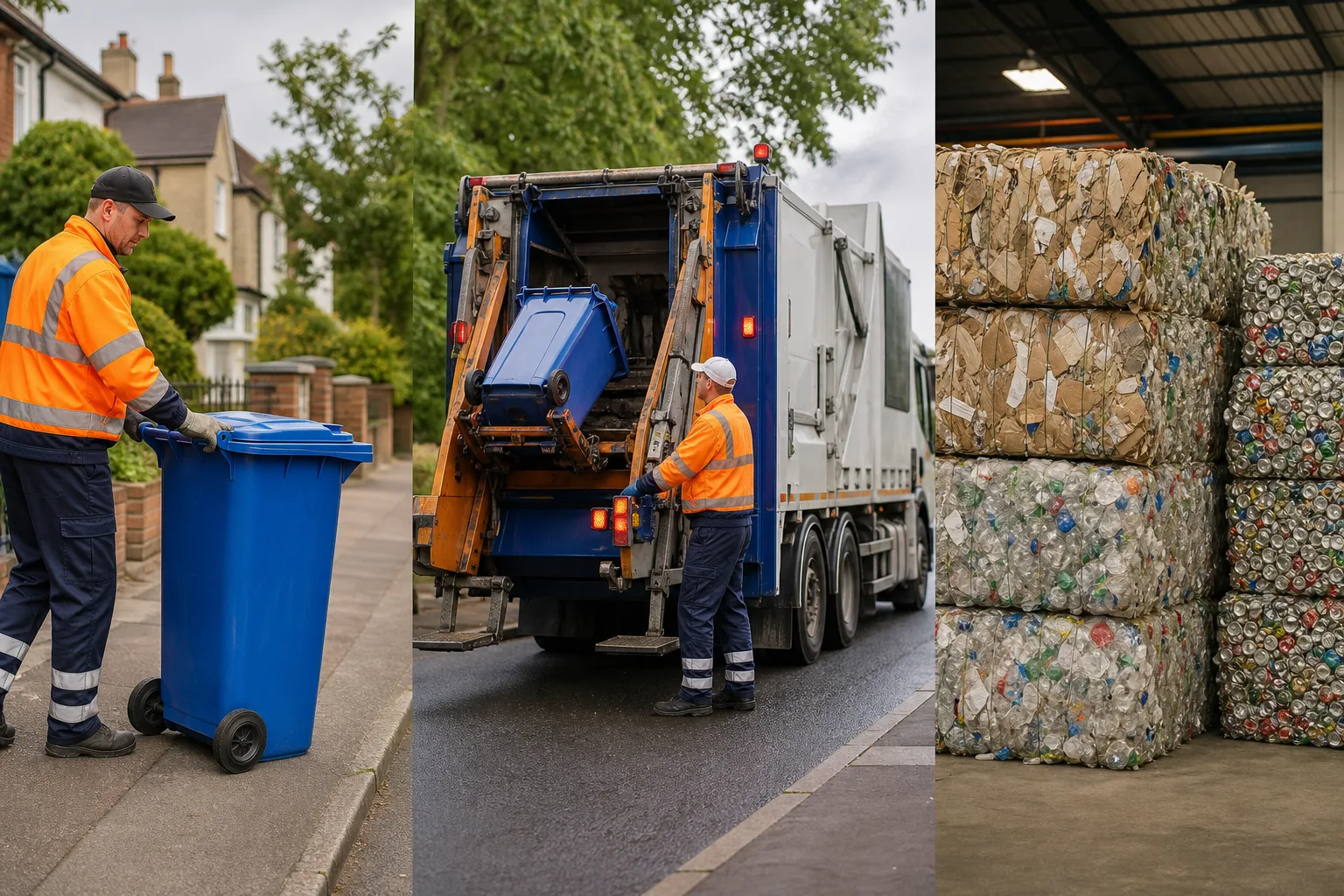
UK recycling is a chain of collection, sorting, reprocessing, and manufacturing—not a single bin lorry trip. What you put out kerbside is mixed with neighbours' material, sorted at a materials recovery facility, sold as commodity bales, and transformed into new packaging, construction products, or fibres. Understanding that chain explains why rules differ by borough and why contamination causes so much trouble.
From Kerbside Box to Sorting Plant
Most English households use wheelie bins or boxes for dry recycling—paper, card, plastics, metal, and sometimes glass. Collection crews compact loads in the lorry; contamination is not visible until the MRF. Scottish and Welsh systems often favour separate streams or consistent national campaigns, but the principle is the same: material must arrive sortable.
At the MRF, conveyor belts, trommels, magnets, eddy-current separators, and increasingly AI-powered optical sorters split streams. Workers pull obvious contaminants—textiles, batteries, nappies—before machines can damage equipment or spoil bales. Output quality determines whether a bale sells or becomes reject destined for energy recovery.
What Happens to Each Material Stream
Paper and card go to paper mills in the UK and Europe; grease or glass fragments downgrade fibre. Aluminium cans melt quickly with high recovery value. Steel cans follow a similar route. PET bottles become fibre, sheet, or new bottles when food-grade loops exist. HDPE milk bottles often become pipe or garden furniture.
Glass is crushed and colour-sorted at dedicated plants, then melted for new jars and bottles. Lower-grade plastics may become park benches, decking, or refuse sacks. What cannot be economically recycled goes to energy-from-waste or, as a last resort, landfill—both cost councils money and waste resources.
Council Contracts and Quality Standards
Local authorities tender collection and processing together or separately. Contracts specify contamination limits, reporting, and where material may be exported. The Environment Agency requires evidence that overseas shipments are recycled at licensed facilities, not dumped.
WRAP and industry bodies publish recyclability labels, but council lists remain the legal source of truth for your address. Extended producer responsibility for packaging is shifting design incentives so more items are genuinely recyclable, not just labelled "check locally."
Your Role in Making the System Work
Recycling works when households and businesses sort at source: rinse food residue, keep textiles out of paper, never bag recycling in non-clear sacks unless allowed. Garden waste and food waste use separate anaerobic digestion or composting routes—mixing them into dry recycling ruins paper fibre.
For larger clear-outs—renovation cardboard, old appliances, bulk plastic—use licensed collectors who segregate at the vehicle and deliver to the right gate. One contaminated tonne at a MRF can waste the value of dozens of diligent households' efforts.
Deposit return schemes for drinks containers, rolling out in parts of the UK, capture high-quality PET and aluminium before they enter household streams—reducing MRF pressure and raising material purity. Even so, the bulk of everyday packaging still arrives through kerbside boxes, so household sorting remains the backbone of the system.
How This Works in London
London boroughs contract different MRFs and publish different yes/no lists. In Camden, estate recycling stores demand clean cardboard breakdown and no black bags. Croydon operates kerbside wheelie bins where lids, rinsing, and allowed plastic types are spelled out on the council website.
Flats and mansion blocks often use chutes or communal bins where contamination spikes; building managers play a big role. For overflow recycling after a move or office clear-out, our rubbish removal team separates recyclables at collection. Check your borough on areas covered.
How This Works in Birmingham
Birmingham collects paper, card, plastics, and cans in one stream for many households, processed regionally. The council runs contamination campaigns when reject rates rise. HWRCs take glass, textiles, and electricals that kerbside boxes exclude.
Trade waste producers must separate cardboard and dry recyclables under commercial contracts to avoid high mixed-waste gate fees. Local collection calendars and allowed materials are summarised on our Birmingham area guide, Selly Oak rubbish removal.
How This Works in Manchester
Greater Manchester's Recycle for Greater Manchester brand standardises messaging across nine boroughs. Paper and card must be clean and dry; plastic bottles and trays follow pictogram guidance on bins. Glass uses bring banks or HWRCs rather than mixed kerbside in most areas.
Public ownership of regional processing—including Longley Lane MRF—means quality improvements benefit all boroughs together. "Bin it right" is economic as well as environmental. See borough specifics on our Manchester area page, Didsbury rubbish removal.
Frequently Asked Questions
Is UK recycling sent abroad?
Some sorted materials are exported when UK reprocessing capacity is full, but export requires Environment Agency paperwork and quality standards.
What happens to glass after collection?
Glass is crushed, colour-sorted and melted into new bottles, jars or aggregate for construction.
Does everything in the recycling bin get recycled?
No. Contaminated or non-recyclable items are removed during sorting and may go to energy recovery or landfill.