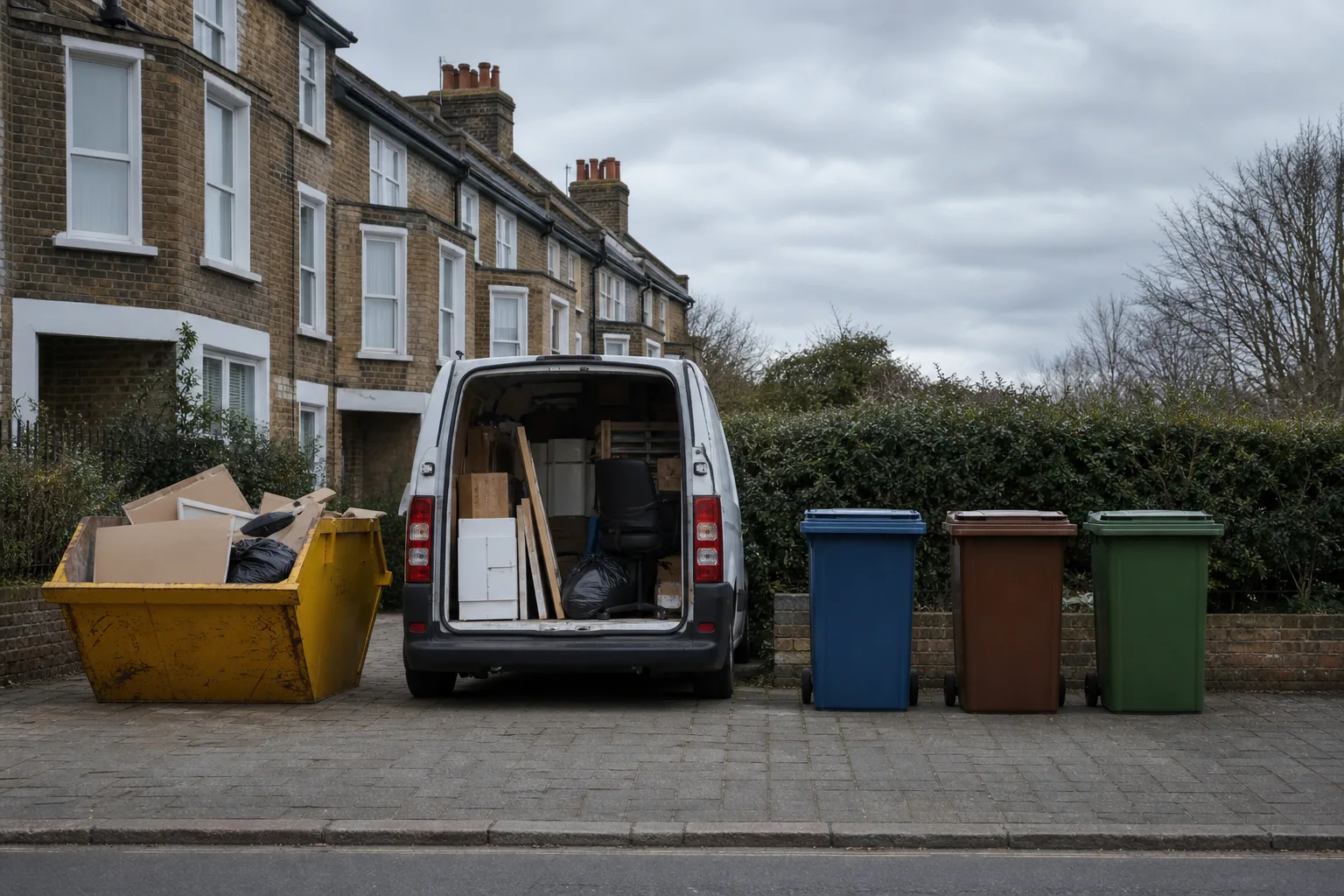
How much does waste removal cost in the UK? There is no single national price—costs depend on whether you are a householder, landlord or business, and whether waste goes through council tax–funded collections or paid commercial routes. In 2026, expect £0 for standard kerbside bins (already paid via council tax), £0–£50+ per council bulky item, £150–£400+ for skip hire, and £80–£350+ for typical private man-and-van clearances depending on volume and city.
Household Waste Removal Costs
Domestic bin collections are not itemised on bills in England—cost is embedded in council tax banding. Garden waste bins are optional subscriptions. Bulky waste is where households most often see explicit charges: London boroughs may charge £20–£35 per item; some northern councils offer limited free allowances.
Private same-day clearance prices reflect crew wages, fuel, insurance and disposal. Quarter-van loads often land in the £80–£150 range; full transit loads can exceed £300 in southern cities. Fridges and mattresses incur extra because they need dedicated recycling routes.
Skip Hire vs Man-and-Van
Mini skips (2–3 yard) commonly run £150–£250 including permit if placed on-road. Midi skips rise toward £350+. You load yourself—good for heavy rubble, poor for sofas from upstairs flats. Man-and-van includes labour and suits mixed house junk.
Hidden skip costs include permit fees, overfill charges and prohibited waste fines. Compare total project cost, not day rate alone.
Commercial and Trade Waste
Businesses must use licensed trade waste carriers—council bins are not an option. Small offices might pay £15–£30 per week for a 240-litre wheelie bin service. Restaurants and takeaways with food waste pay more due to weight and collection frequency. Construction firms buy skips or grab lorries by the tonne.
Landfill tax and gate fees flow through to every invoice. Dry cardboard and segregated glass lower costs versus mixed general trade waste.
What Pushes UK Prices Up in 2026
Landfill tax escalators, energy costs at MRFs and EfW plants, driver shortages and stricter export rules all feed through. Producer responsibility fees on packaging are beginning to return funds to councils but do not eliminate collection costs. Electric fleet investment adds capital cost recovered over contract terms.
Contamination remains a silent tax: rejected recycling loads pay twice. Prevention and sorting are cheaper than disposal at every scale.
How This Works in London
Waste removal cost in London typically exceeds the UK average by 15–30% for private services—congestion, parking suspensions and higher wages dominate. Borough bulky fees vary widely; some offer free DSO collections for eligible residents. Outer areas like Croydon may rely on longer hauls to regional disposal.
Transparent quotes on our services page include disposal—compare with council waits. Full coverage on areas covered.
How This Works in Birmingham
Birmingham's municipal scale delivers competitive gate fees through Tyseley EfW and regional contracts. Bulky waste charges are published online—often mid-range nationally. Student turnover in Selly Oak drives autumn demand for private clearances when council slots fill.
Landlords budgeting void periods should compare council bulky limits with one private load—see our Birmingham area guide.
How This Works in Manchester
Greater Manchester's combined procurement spreads disposal costs across ten boroughs, helping stabilise trade waste rates. HWRCs are free for cars within limits; vans need permits. City terraces in Didsbury and the Northern Quarter favour man-and-van over skip permits on narrow streets.
Local pricing context on our Manchester area page links council calculators and private options.
Frequently Asked Questions
How much does household waste removal cost in the UK?
Kerbside collection is funded through council tax. Paid options include bulky collections (£0–£50+ per item in many areas), skip hire (£150–£400+), or private clearance from about £80–£300 depending on load size.
How much does commercial waste removal cost?
Businesses pay monthly bin rental plus collection and disposal per tonne. Small trade bins often start around £15–£30 per week; heavy food or mixed waste costs more.
Does waste removal cost more in London?
Yes. Higher labour, parking and haulage typically push London quotes above Midlands and northern cities for the same volume.