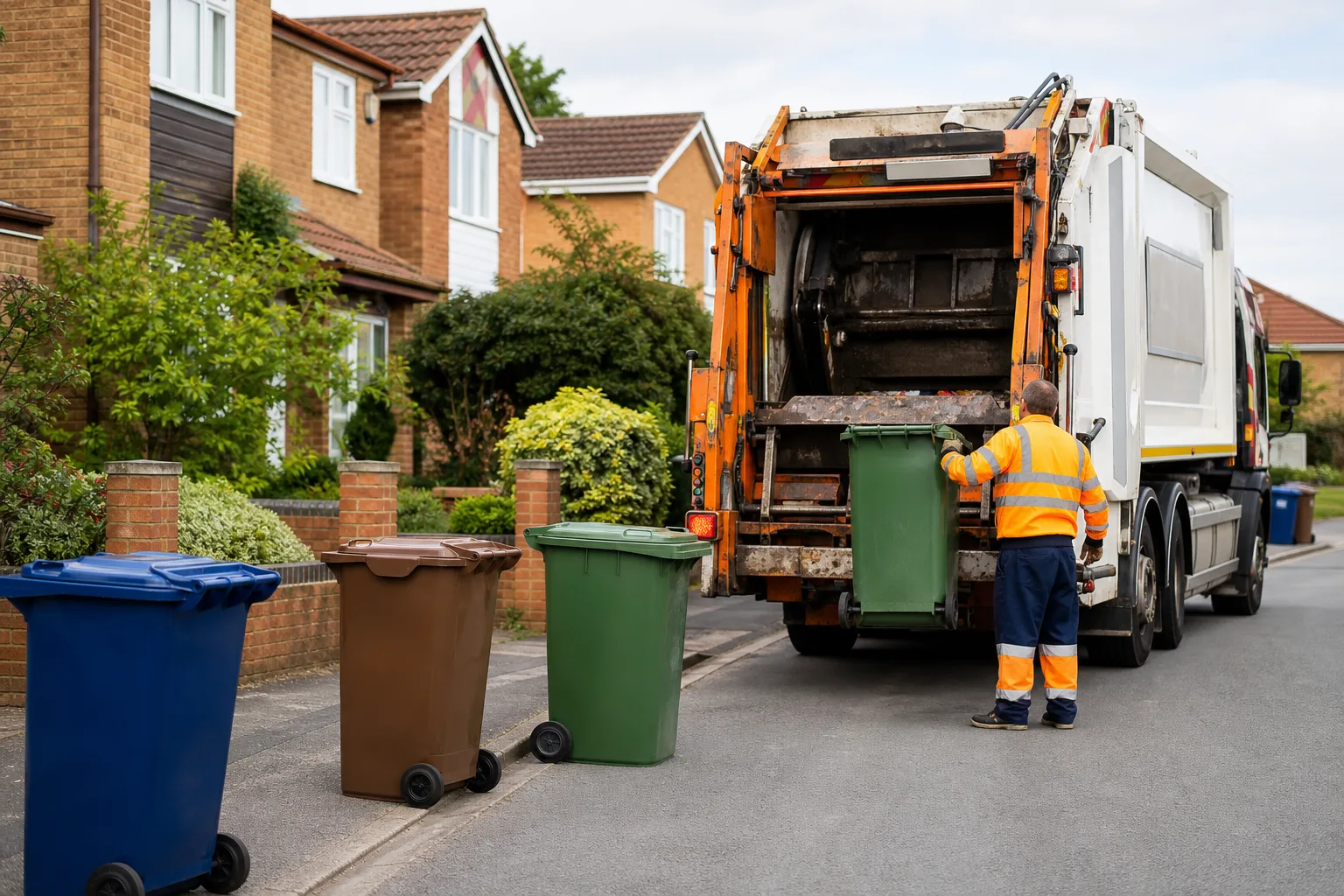
Once your wheelie bin is emptied, household waste begins a regulated journey through transfer, sorting, recovery, or disposal—and the path differs completely depending on whether it left in the recycling box, food caddy, garden bin, or general waste container.
The First Handover
Collection crews record missed streets, contaminated bins, and overloaded containers. Recycling and general waste usually travel on separate trucks to avoid cross-contamination. At the depot or transfer station, loads are weighed—council contracts often pay by tonne collected and processed.
Recyclables may be tipped loose into MRF feed bays or kept in compartments if the vehicle is split-body. Food waste goes to dedicated tanks for anaerobic digestion or in-vessel composting. Garden waste is bulked for open windrow composting or AD. General waste is compacted for energy recovery or landfill.
Sorting and Processing Routes
Mixed recycling enters drum screens, magnets, and optical sorters that separate paper, plastics, and metals. Output bales are sold to reprocessors. Contaminated batches are rejected and downgraded to residual treatment. Food waste produces biogas for electricity and digestate used as soil conditioner on farmland, subject to quality protocols.
General household waste in many UK cities now fuels energy-from-waste plants where metals are recovered from bottom ash afterward. Only material that cannot be burned safely or is fully inert may reach landfill. Bulky items collected separately—sofas, mattresses, white goods—often pass through reuse charities or dismantling lines for metal and wood recovery first.
What Councils Must Prove
Local authorities report recycling rates to government and must show where waste ends up under duty of care rules. Waste transfer notes chain from collector to final facility. Fly-tipping bypasses this system and leaves taxpayers funding clean-up. Using registered carriers protects you if waste is traced illegally dumped.
Household recycling centres extend the same duty of care: staff direct you to skips for wood, metal, electricals, and general rubble. Traders posing as householders at tips face penalties; commercial waste belongs on licensed routes.
Where Your Actions Matter
Correct sorting at the kerb determines which facility receives your waste. A battery in a general bin can cause fires in compaction trucks; food in paper recycling ruins bales. Understanding post-collection routes motivates better habits more than abstract environmental slogans.
Seasonal patterns shift destinations too. Christmas cardboard spikes MRF throughput in January; garden waste peaks compress into compost rows in autumn. Textile banks feed charity sorters or export markets with quality grading on site before unusable rags become industrial wipers or energy feedstock. None of this is visible from the pavement, which is why annual council waste reports remain the best public summary of actual destinations.
If you hire a private collector, ask which transfer or processing category applies—reuse shop, WEEE recycler, wood biomass, or residual energy plant. Duty of care transfer notes should name the facility type even when you will not visit it yourself.
How This Works in London
London boroughs send collected waste through capital and regional hubs. In Croydon, kerbside streams feed borough-contracted processors; flats may use chute systems that merge poorly sorted material unless residents follow signage. Hackney emphasises separate food caddies to keep digestate quality high and reduce black-bin weight.
Overflow from home renovations or landlord clear-outs exceeds what weekly collections handle—our rubbish removal team documents onward disposal for compliance. Browse all areas covered for postcode availability.
How This Works in Birmingham
Birmingham City Council collects recycling, general waste, and optional garden subscriptions. Recyclables move to sorting facilities; residual waste largely goes to Tyseley energy recovery rather than raw landfill. Bulky collections are booked separately and may strip reusable items before shredding.
Recycling centres accept DIY waste with ID checks. The council publishes what happens to each stream in annual waste reports. Our Birmingham guide and Selly Oak page link local rules with practical disposal options.
How This Works in Manchester
Greater Manchester’s kerbside system separates paper and card from containers in many boroughs, feeding Longley Lane MRF. General waste from Manchester households joins the combined authority’s energy recovery contract. Food recycling expansion changes the post-collection map by diverting tonnes from incineration to AD.
Trade waste from shops and landlords follows commercial weighbridge routes, not domestic trucks. Residents moving home often generate mixed loads best handled by a single licensed collection—details on our Manchester area page, Didsbury rubbish removal.
Frequently Asked Questions
Where does general waste go after collection?
It is usually bulked at a transfer station then sent for energy recovery or landfill depending on local contracts.
Is recycling sorted at the kerbside or at a plant?
Most UK councils use co-mingled recycling collected in one bin, then sorted at a materials recovery facility.
Can I track what happens to my waste?
Councils publish waste strategies and contractor reports, though individual bag tracking is not available to residents.